

 Italiano
 Español
If you are a VMware system administrator, you may find useful to configure a group of virtual machines to auto start at the ESXi host boot.
There may be different reasons to do that, but the most common is to recover from a blackout. ESXi hosts can power on automatically when the power comes back and the virtual machines will be powered on with them.
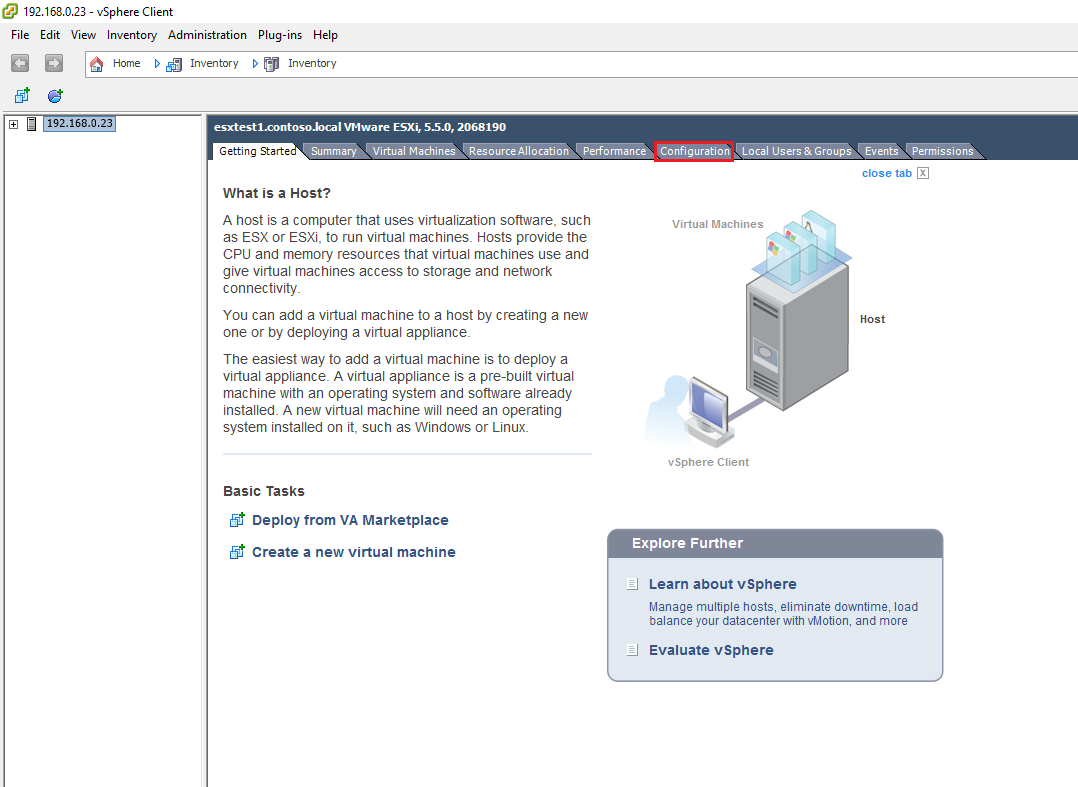
Log in your vSphere Web Client and click Configuration:
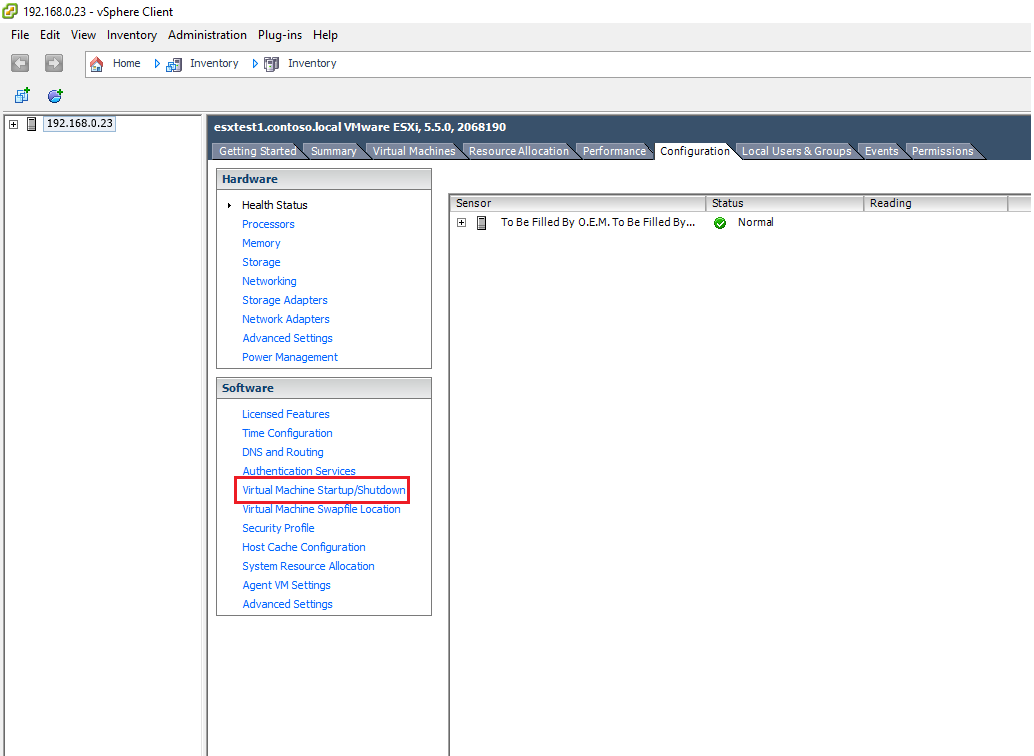
Select Virtual Machine Startup/Shutdown:
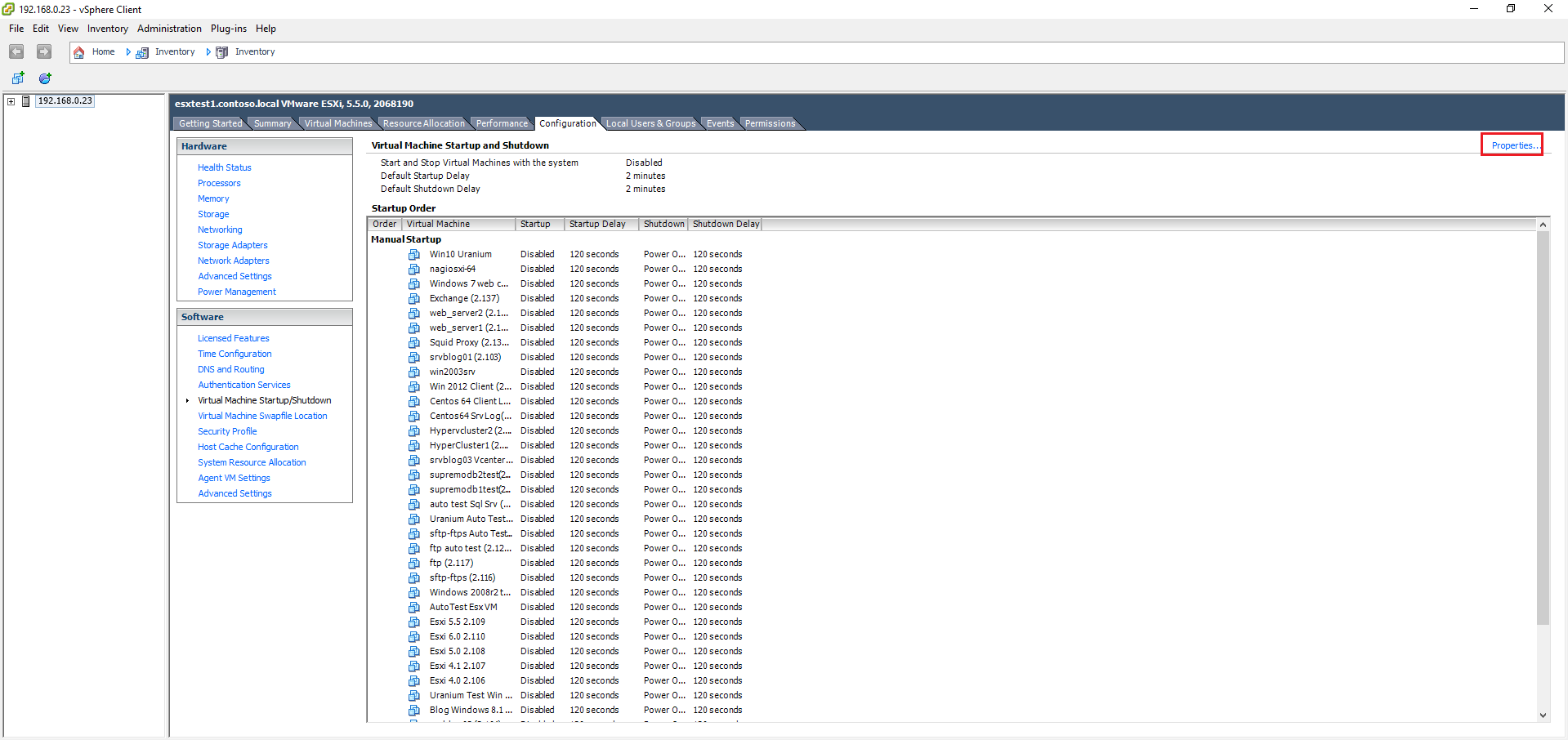
Select Properties:
As you can see, it’s now possible to configure auto start and auto stop of the VMs. Check Allow virtual machines to start and stop automatically with the system:
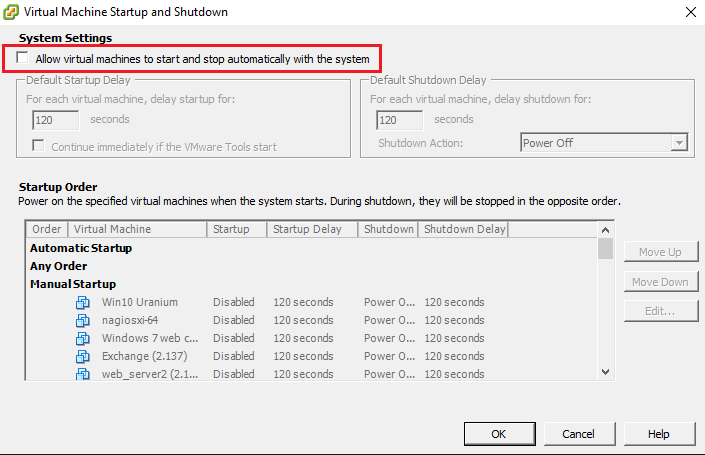
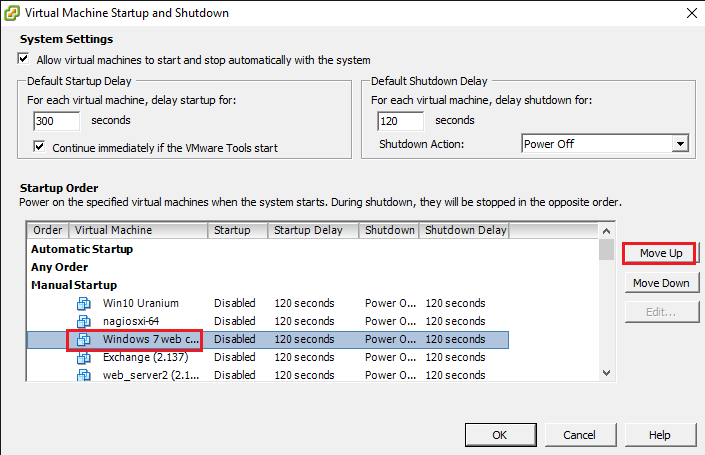
Define the global paramenters for the startup and shutdown of all the VMs. Then move the virtual machines you need to auto start from the Manual Startup list to the Automatic Startup one:
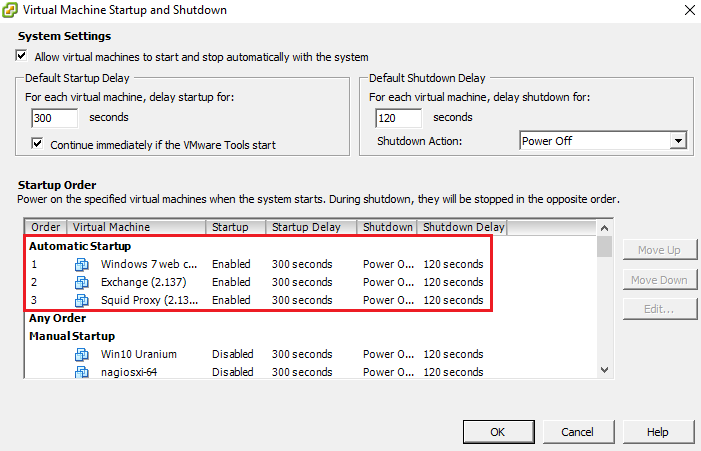
Review the Startup Order list:
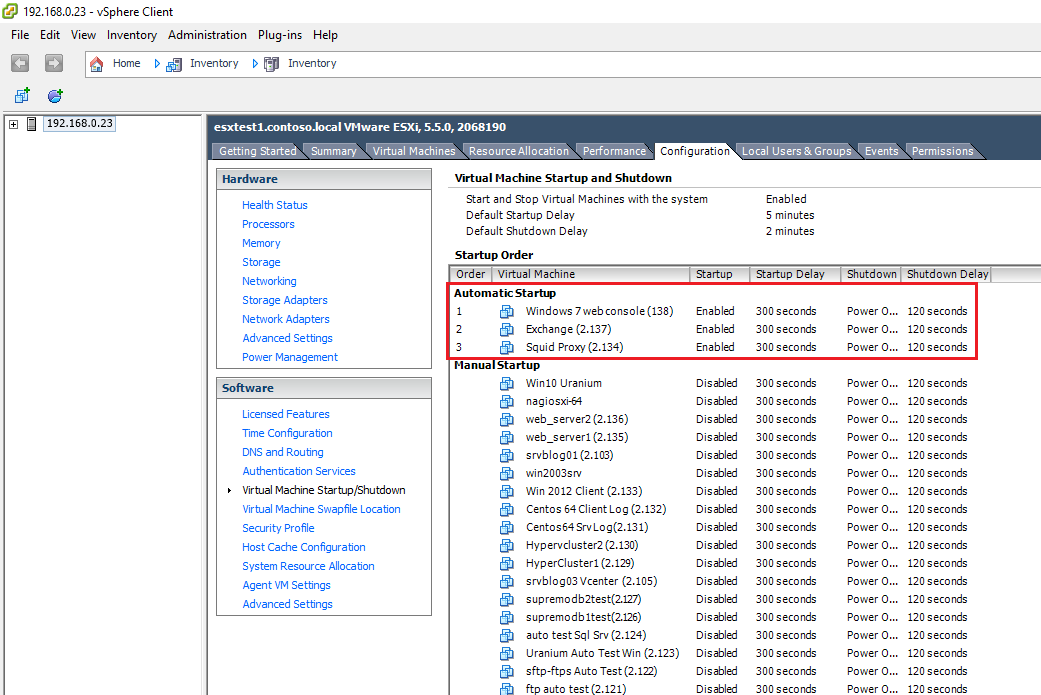
It’s also possible to verify the startup and shutdown sequence from the main tab:
Read related articles
How to install and configure VMware ESX 9.1 in 2026
Install and configure VMware ESX 9.1 (formerly ESXi) step by step: hardware requirements, ISO download from the Broadcom portal, DCUI network setup, Host Client access and the new licensing model.
VMware vSphere Client in 2026: how to access and manage vCenter
There is no VMware vSphere Client to download in 2026. Access vCenter through the built-in HTML5 client at https:///ui, manage standalone ESXi hosts via the Host Client, and automate with VCF PowerCLI. This guide covers the free ESXi Hypervisor, VCF 9, support timelines, and migration paths for MSPs.
Install VMware ESXi on a Hyper-V
It is possible to use nested virtualization to run VMware ESXi as a Virtual Machine in Hyper-V. To some, this